There are leaders who govern for the moment, and there are leaders who understand that the true measure of leadership is what remains after the applause has faded.
Governor Ahmadu Umaru Fintiri belongs in the latter category.
His administration has increasingly positioned Adamawa State not merely as a place where people live and work, but as a state capable of receiving the world, hosting major events, attracting investment and providing the infrastructure and services required by a modern society.
The emerging transformation of Yola tells a compelling story.
Soon, governmental and non-governmental organisations will have a befitting venue to host major programmes and international engagements at the International Conference Centre, Yola. The significance goes beyond the structure itself. It represents a deliberate attempt to place Adamawa on the map of states capable of hosting events of national and international relevance.
But hosting the world requires more than a conference hall.
It requires movement, recreation, healthcare, commerce and comfort.
That is where the broader vision of the Fintiri administration becomes evident.
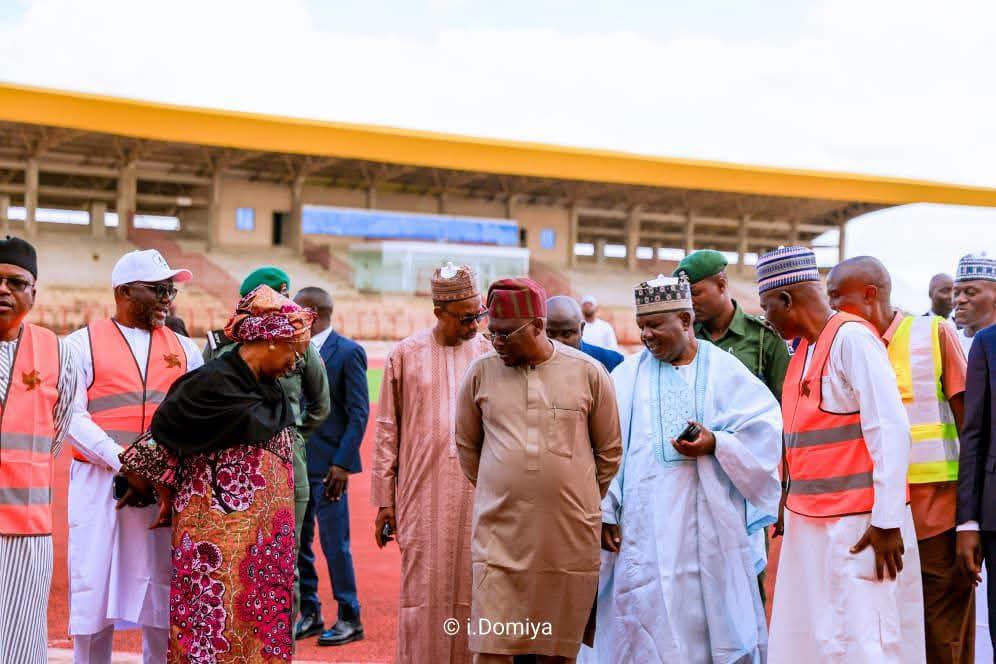
The International Sports Complex and Modern Amusement Park are designed to provide spaces for sporting activities, recreation and entertainment. The quality road network and flyover bridges are improving connectivity while adding a new aesthetic dimension to the state capital.
And should the unexpected happen, the Adamawa State Teaching Hospital and Mother & Child Specialist Hospital provide critical healthcare infrastructure capable of responding to emergencies and meeting the needs of residents and visitors alike.
Then comes commerce.
The International Shopping Complex adds another important component to this emerging urban ecosystem, providing a modern destination for quality products and commercial activities.
Taken together, these projects demonstrate that Governor Fintiri’s vision is not simply about constructing individual projects. It is about building an environment in which infrastructure works together to support economic activity, social life, investment and human development.
That is the difference between constructing projects and building a city.
Governor Fintiri appears to understand a fundamental truth of modern governance: the world is becoming increasingly interconnected, and states must prepare themselves to compete, attract, host and accommodate.
Adamawa cannot afford to remain on the margins.
The governor’s response has been to invest in the physical and institutional foundations required to open the state to greater opportunities.
His record therefore deserves to be assessed not only through today’s political arguments, but through the lens of what these investments could mean for Adamawa years from now.
A flyover may solve today’s traffic challenge, but it can also shape tomorrow’s urban development.
A conference centre may host today’s meeting, but it can become tomorrow’s platform for international conferences, investment summits and major institutional engagements.
A modern hospital may serve today’s patient, but it can also strengthen the state’s healthcare system for generations.
A sports complex and amusement park may provide today’s recreation, but they can equally create opportunities for tourism, sports development, employment and youth engagement.
This is why leadership should ultimately be judged by vision, execution and legacy.
Governor Fintiri has demonstrated that he understands the importance of leaving Adamawa better positioned than he met it. His administration’s infrastructure drive is gradually changing the physical character of the state and, more importantly, changing perceptions about what is possible.
The world may not come to Adamawa tomorrow in the numbers we desire.
But when it does, the state must be ready.
Ready with roads.
Ready with bridges.
Ready with hospitals.
Ready with places to shop.
Ready with places to relax.
Ready with facilities to host major events.
Ready with the infrastructure of a modern state.
That is the larger story behind the Fintiri legacy.
Politics will come and go. Governments will change. Leaders will eventually leave office. But infrastructure that serves the people does not leave with its creator.
Posterity will remember the roads. Posterity will remember the bridges. Posterity will remember the hospitals, the conference centre, the sports and recreation facilities and the commercial infrastructure.
Most importantly, posterity will remember the leader who understood that Adamawa’s future could not be secured by managing the present alone.
Governor Ahmadu Umaru Fintiri has chosen to build for tomorrow.
And when the world eventually looks towards Adamawa, the foundations of that welcome will stand as a lasting testimony to a governor who knew what was required, took the challenge seriously and proved his mettle through governance.
The Fintiri story, ultimately, may not be about the politics of today. It may be about the infrastructure of tomorrow—and the enduring legacy that remains when today’s politics is history.