- Welcome to the official website of the Adamawa State Planning Commission
- info@adspc.ad.gov.ng

- WELCOME TO THE OFFICIAL WEBSITE OF THE ADAMAWA STATE PLANNING COMMISSION
- info@adspc.ad.gov.ng
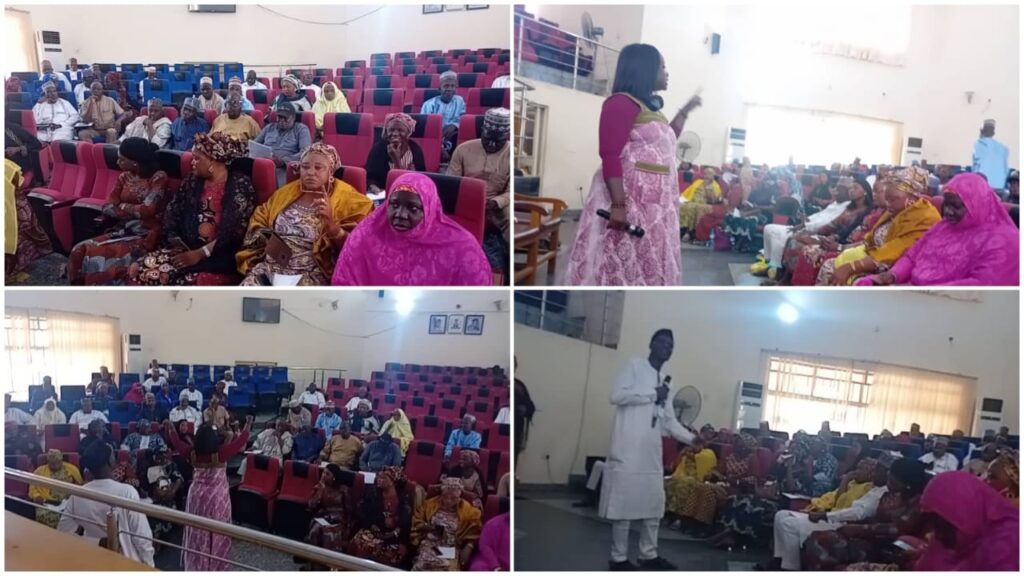
The two-day Capacity Building Workshop for Local Government Area (LGA) Committees on Food and Nutrition, organised by the Adamawa State Planning Commission in collaboration with UNICEF, concluded on a high note today Friday-6th March, 2026, with participants from the seven Central Zone LGAs producing concrete, LGA-level Action Plans to guide nutrition programming in their communities.
The second day built on the strong foundation laid on Day 1, deepening participants’ technical knowledge and culminating in a practical planning exercise that demonstrated the readiness of LGA committees to take ownership of nutrition outcomes at the grassroots level.
The second day commenced with a recap session in which participants were invited to reflect on and share their key learnings from Day 1. Contributions from across the seven LGAs revealed a strong grasp of the content covered, including the basics of nutrition programming, the Adamawa State Nutrition Situation, and the State’s Strategic Plan of Action on Food and Nutrition. The session served both as a knowledge reinforcement exercise and as an energising start to the day’s proceedings.
The first technical presentation of the day was delivered by consultant Ms. Jessica Bartholomew, who walked participants through the pillars underpinning effective community-level nutrition programming. Ms. Bartholomew’s presentation outlined the essential building blocks that LGA committees must leverage to design, implement, and sustain impactful nutrition interventions, emphasising the importance of community engagement, multi-sectoral coordination, and context-sensitive approaches in addressing malnutrition at the local level.
Mr. Koungu delivered a significant presentation, providing a detailed exposition of the roles and responsibilities of the Local Government Committee on Food and Nutrition. Mr. Koungu clearly delineated the mandate of the committee, articulating its function as the primary governance structure for coordinating, overseeing, and driving nutrition-related activities at the LGA level.
He also outlined the official composition of the committee at the LGA level, clarifying membership, including the LGA Vice Chairperson, who serves as Chair, sector directors, technical focal persons, and Ward Development Committee Chairmen. The presentation was well received by participants, many of whom indicated a renewed sense of purpose and clarity about their individual roles within the committee structure.
Ms. Bartholomew returned to the podium for a second presentation, this time focusing on monitoring and evaluation (M&E) of nutrition activities — a critical but often under-resourced aspect of local-level programming. She began by establishing a clear understanding of what M&E is and why it matters, before unpacking its key components, which include planning, data collection, data analysis, reporting, and use of findings for decision-making.
Participants were introduced to key indicators for nutrition M&E, covering both process and outcome indicators relevant to the LGA context. Ms. Bartholomew also walked participants through practical tools for data collection and detailed the data collection and reporting methods applicable to LGA-level nutrition committees, equipping them with the skills needed to track the progress and impact of their interventions.
A highlight of the day was the practical action planning exercise in which participants, working as LGA-specific teams, developed LGA-level Action Plans for nutrition programming in their respective local government areas. Drawing on knowledge gained across both days of the workshop, the teams identified priority nutrition issues, set out clear objectives, assigned responsibilities, and proposed timelines and resource requirements for implementation.
The successful completion of the first workshop batch marks an important milestone in the Adamawa State Planning Commission’s broader effort to improve nutrition governance across all 21 LGAs. Future batches covering LGAs in the Northern and Southern zones of Adamawa State are expected to follow in the coming weeks, with the full program designed to equip every LGA committee across the State with the knowledge, tools, and plans necessary to fulfill the State’s nutrition commitments.


Copyright © 2025 Adamawa State Planning Commission